How to Work Amateur Satellites: Your First QSO
How the G7RDX satellite tracker predicts passes, what AOS, LOS and Doppler mean, which satellite to try first and how to make your first QSO through an amateur satellite.
VHF amateur operating in the UK covers 50, 70 and 144 MHz, where signals travel line of sight most days and far beyond it when the atmosphere cooperates.
Tropospheric ducting forms under high pressure inversions and regularly supports contacts well past 1,000 km on 144 MHz. Sporadic E opens 50 MHz across Europe in short, intense bursts through early summer. Meteor scatter reflects signals off ionisation trails lasting under a second, worked with MSK144 in 15 second sequences and most productive around the annual shower peaks. Aircraft scatter and auroral reflection add further paths.
Antenna and receiver quality decide results more than power does. A well built Yagi at height, fed with low loss coax into a quiet receive path, will consistently outperform a larger amplifier driving a compromised system.
How the G7RDX satellite tracker predicts passes, what AOS, LOS and Doppler mean, which satellite to try first and how to make your first QSO through an amateur satellite.
Meteor Shower Peaks 2026 Updated Meteor Shower Calendar 2026-2027 for Amateur Radio VHF enthusiasts use meteor scatter to make contacts over distances up to 2000 km. With several major meteor shower events throughout the year, this calendar will help you prepare to take advantage of these celestial events for radio communications. Below is a table … Read more
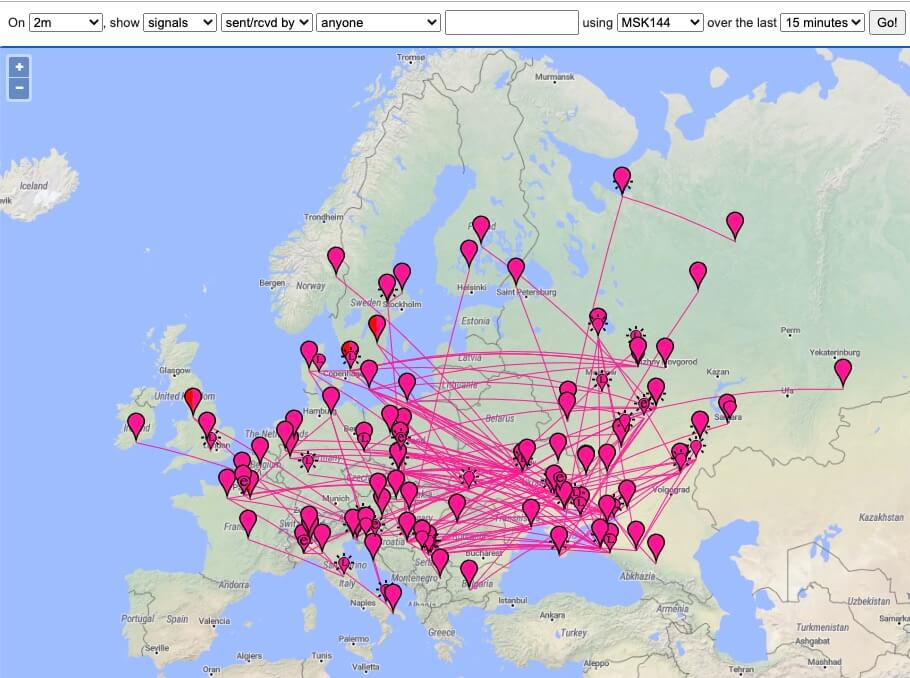
Meteor scatter is an exciting propagation mode that allows amateur radio operators to make long-distance contacts using VHF and UHF frequencies. With the right equipment and software, it is possible to make contacts hundreds or even thousands of miles away. Whether using JT6M, JT65, MSK144, FSK144, or CW, meteor scatter offers a unique and rewarding … Read more
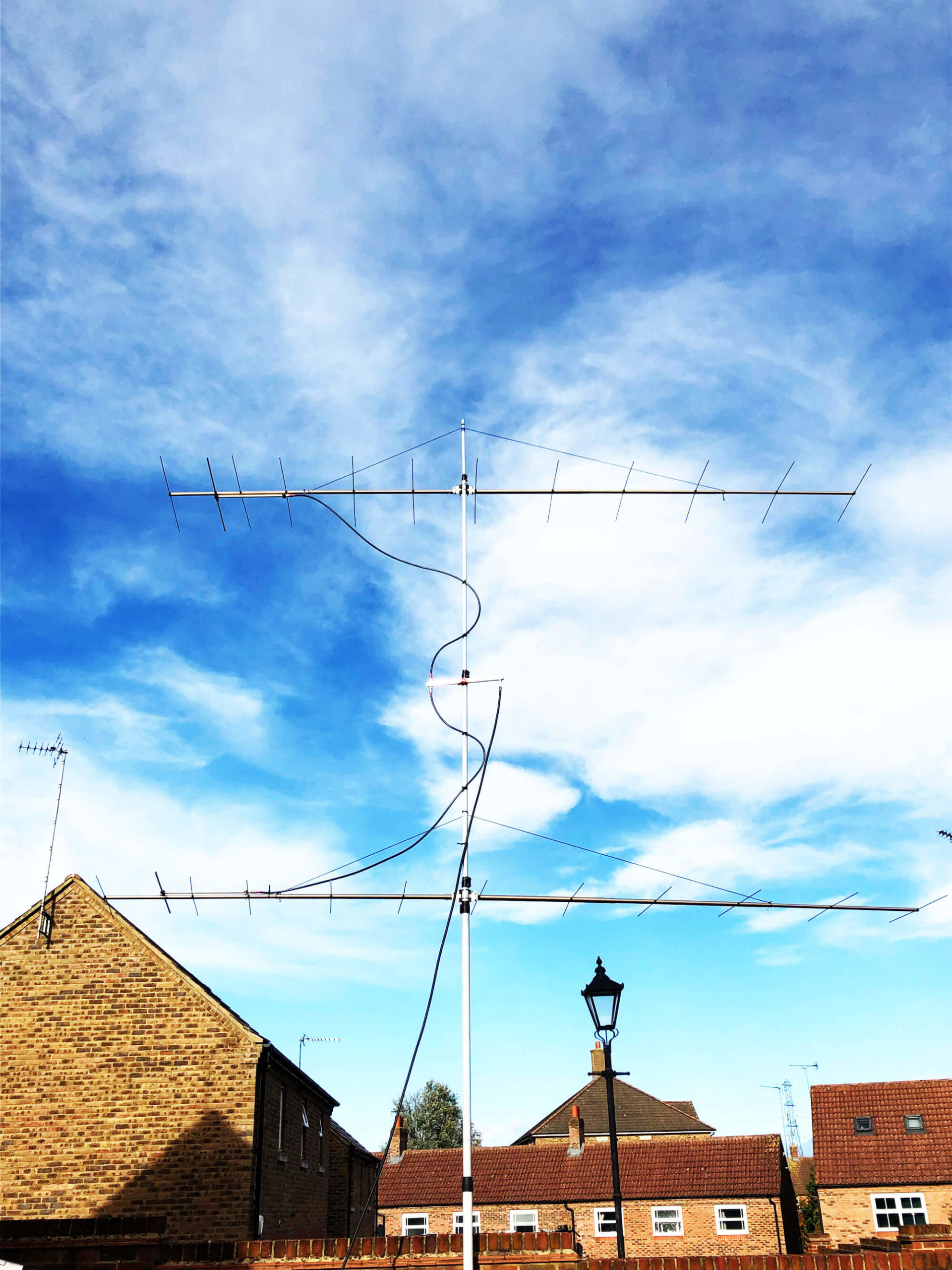
Stacking two 12 Element Yagis for 2m 12JXX2 Gain 12.67 dBd/14.81 dBi Angle -3dB E/H 33.8° – 36.6° Spacing E/H 3.58 – 3.31 m SWR 1:1.2 Lenght 5.6 m – 2.69 λ Boom Ø 25 – 30 – 35 – 30 – 25 Element Ø 5mm Connector N-Type Power 1000W Pole diameter 30÷50mm Ø (60 … Read more
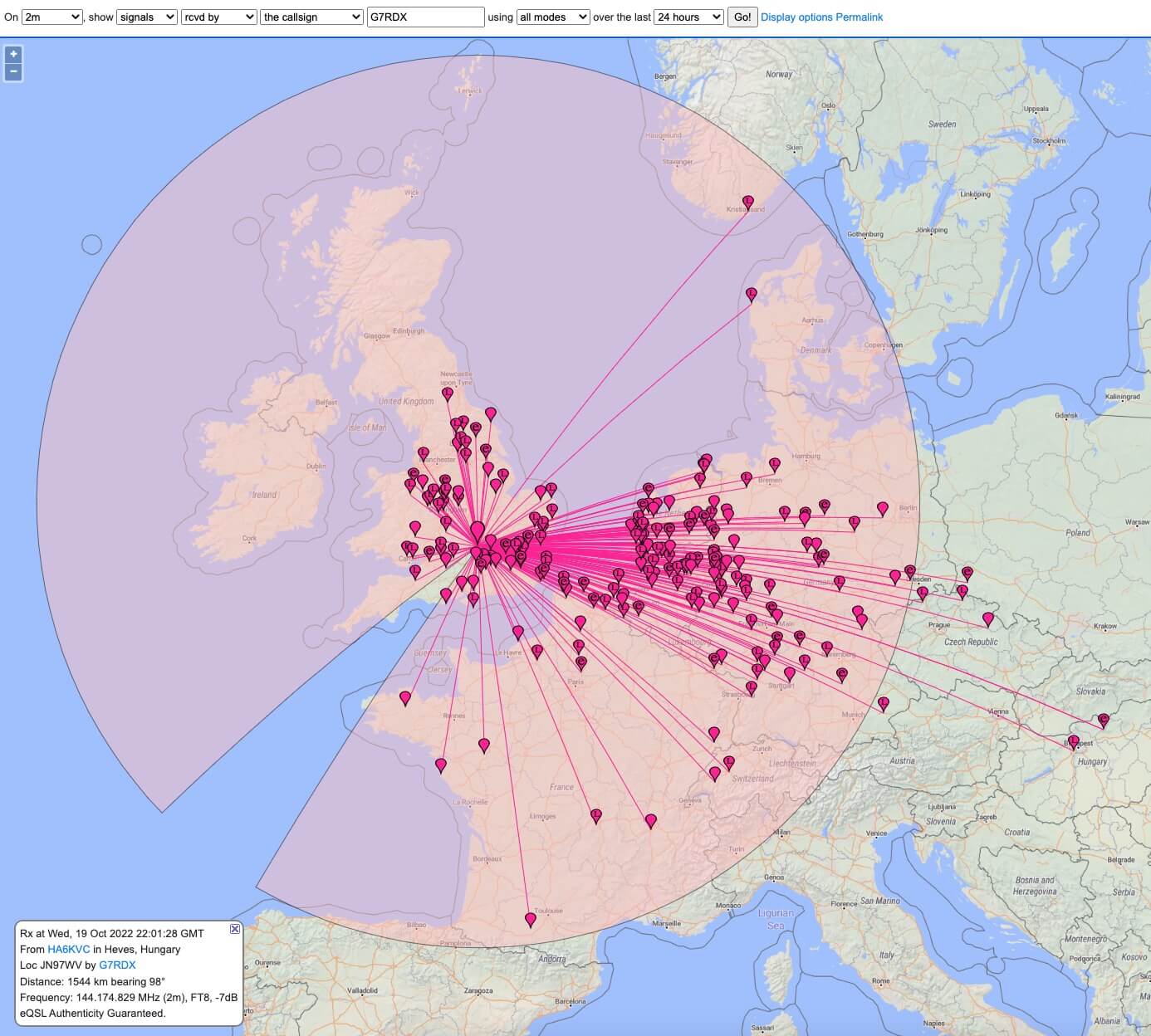
Tropospheric propagation on 2m Very good conditions and great activity in Europe. Early in the morning I heard some strong signals from Germany and surprisingly the Czech Republic came up on FT8. In the evening my Laptop decoded a signal from Hungary at 1544km but sadly I wasn’t in the shack to try to make … Read more